
What Happens When Asbestos Is Discovered During a Commercial Renovation?
Commercial renovations often reveal unexpected conditions behind walls, above ceilings, and beneath flooring. In older buildings, one of the most significant discoveries is suspected asbestos-containing material. From pipe insulation and ceiling tiles to flooring adhesives and mechanical components, asbestos may be present in areas that remain concealed until construction begins.
For property owners, general contractors, and facility managers, discovering asbestos during a renovation can raise immediate concerns about worker safety, regulatory compliance, project timelines, and unexpected costs. Understanding how to respond can help protect building occupants, minimize disruption, and keep the project moving toward completion.
Why Is Asbestos Still Found in Commercial Buildings?
For decades, manufacturers incorporated asbestos into construction materials because of its durability, heat resistance, and insulating properties. Commercial buildings constructed or renovated during periods when asbestos was widely used may contain asbestos-containing materials throughout their interiors and mechanical systems. Common locations include thermal insulation around pipes and boilers, vinyl floor tiles, flooring mastics, roofing materials, fireproofing, textured coatings, and certain ceiling systems. Industrial facilities, schools, office buildings, hospitals, and warehouses may contain several types of asbestos-containing materials within a single property.
For example, during asbestos abatement at The Ring Building in Washington, D.C., ACM Services, Inc. removed asbestos-containing floor tile and mastic, plaster, pipe insulation, and ceramic tile grout throughout the 14-story commercial property. The project demonstrates how asbestos-containing materials can appear across multiple building systems and require extensive coordination during remediation.
Although regulations have significantly restricted asbestos use, existing materials can remain in buildings for decades. Some asbestos-containing products have also remained legally available in certain applications, making the age of a building an imperfect indicator of asbestos risk.
Renovation activities can expose materials that previous inspections did not identify, particularly when workers open concealed cavities or remove existing building components. As a result, contractors should evaluate potential asbestos hazards during preconstruction planning and establish procedures for addressing unexpected discoveries.
Step 1: Stop Work in the Affected Area & Determine Friability
When workers discover a material they suspect contains asbestos, their first priority must be to stop activities that could disturb it. Cutting, drilling, sanding, grinding, or demolishing asbestos-containing materials can release microscopic fibers into the air. Inhalation of airborne asbestos fibers can increase the risk of serious illnesses, including mesothelioma, lung cancer, and asbestosis. The potential for asbestos fibers to become airborne depends partly on whether the material is classified as friable or non-friable asbestos. Understanding the distinction can help property owners and contractors recognize why different materials require different handling procedures.
What Is Friable Asbestos?
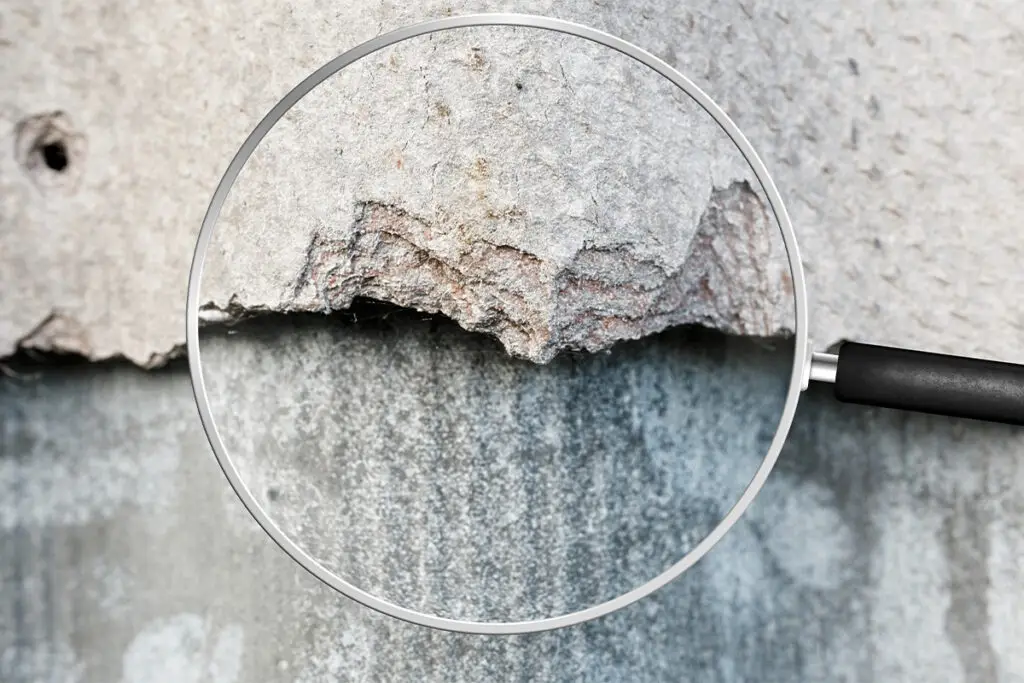
Friable asbestos-containing material can be crumbled, pulverized, or reduced to powder by hand pressure when dry. Common examples may include certain types of pipe insulation, sprayed-on fireproofing, and deteriorating thermal insulation. Because these materials can release fibers when damaged or disturbed, they often require extensive precautions during removal.
What Is Non-Friable Asbestos?
Non-friable asbestos-containing material is more firmly bound within another substance and cannot be easily crumbled by hand pressure when dry. Examples include certain vinyl floor tiles, asbestos-cement products, and roofing materials. Although these materials generally have a lower potential to release fibers when intact, cutting, sanding, grinding, or crushing them can create airborne asbestos hazards.
The distinction also affects how asbestos-containing materials are regulated. Under the EPA’s asbestos NESHAP, certain non-friable materials can become regulated asbestos-containing material when they are damaged or subjected to activities likely to break them down. The EPA provides additional information in its guidance on friable and non-friable asbestos-containing materials.
What Should You Do After Discovering Suspected Asbestos?
Regardless of whether the material appears friable or non-friable, workers should leave it undisturbed and notify the site superintendent, project manager, or designated safety representative. The project team should restrict access to the affected area and prevent additional work that could spread dust or debris.
If workers have already disturbed the material, the response may require additional precautions. Site personnel should avoid dry sweeping, using ordinary vacuum cleaners, or moving potentially contaminated materials through occupied areas.
The contractor should consult qualified asbestos professionals to assess the conditions and determine the appropriate next steps. Depending on the situation, additional containment measures and air monitoring may be necessary.
Step 2: Arrange Independent Asbestos Inspection and Testing
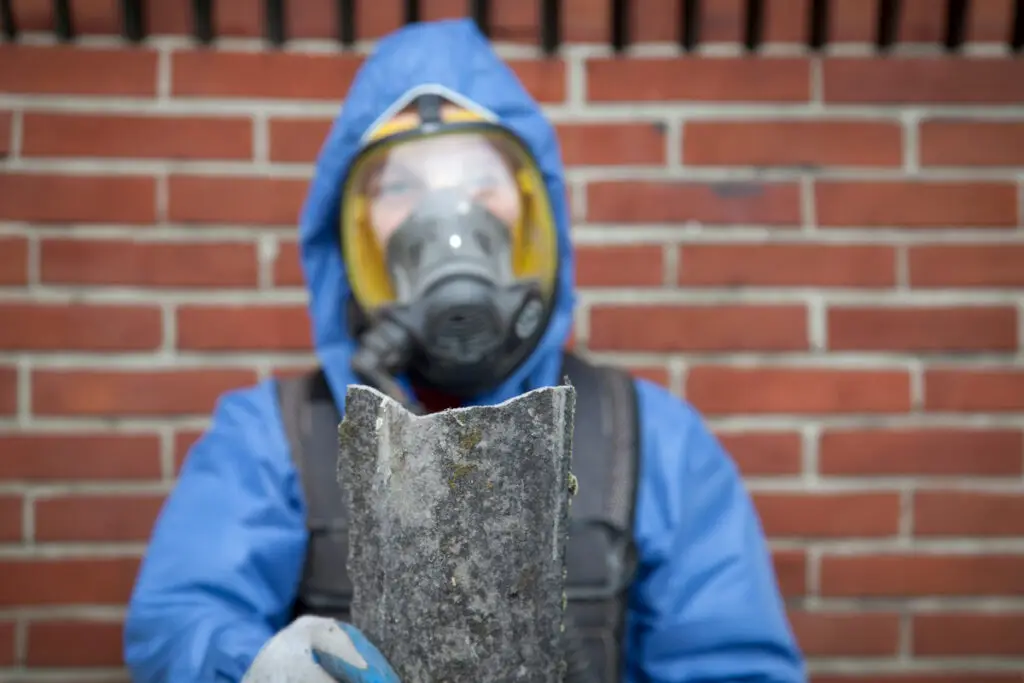
Once the affected area is secured, the project team should arrange an assessment by a qualified, independent asbestos inspector. ACM Services, Inc. recommends enlisting a third-party environmental consulting firm to conduct asbestos inspections and testing before abatement begins and to independently verify the results after remediation is complete. Asbestos fibers cannot be reliably identified through visual examination alone. Materials that resemble ordinary insulation, drywall compound, or flooring adhesives may contain asbestos, while similar-looking products may be asbestos-free. A qualified inspector can review existing asbestos surveys, evaluate newly exposed materials, and collect representative samples for laboratory analysis.
Why Is Independent Third-Party Asbestos Testing Important?
Independent environmental testing provides property owners and general contractors with an objective assessment of existing hazardous materials and the results of completed remediation. Before abatement, a third-party inspector can identify asbestos-containing materials, document their locations, and establish the scope of work.
After abatement, the same independent firm or another qualified consultant can conduct appropriate visual inspections, air clearance testing, and other verification procedures. These assessments help confirm that the specified asbestos removal work has been completed and that the affected area satisfies applicable clearance requirements. When a project involves additional environmental hazards, such as lead-based paint or mold, separate testing and verification procedures may be appropriate.
ACM Services recommends working with experienced environmental consulting firms such as ECS (Engineering Consulting Services), which provides asbestos surveys, laboratory analysis coordination, air monitoring, and clearance testing.
Property owners should verify that their selected consultant holds the required state licenses, accreditations, and qualifications for the project. They should also establish the scope of independent testing and clearance documentation before abatement begins.
If an existing asbestos survey covers the building, the project team should review its scope and limitations. Some surveys exclude inaccessible areas, concealed mechanical systems, or materials that were unavailable for inspection before demolition began. Supplemental inspection may be necessary when construction exposes previously inaccessible materials.
By coordinating independent environmental testing with a qualified environmental remediation contractor, property owners can establish clear responsibilities for identifying hazardous materials, performing abatement, and verifying the completed work.
Step 3: Determine Applicable Asbestos Regulations
Commercial asbestos abatement involves federal, state, and local regulatory requirements that can influence how a renovation proceeds. The Environmental Protection Agency’s National Emission Standards for Hazardous Air Pollutants (NESHAP) establish asbestos requirements for covered demolition and renovation activities. These regulations address inspections, regulated asbestos-containing materials, removal procedures, waste handling, and notification obligations. Under the asbestos NESHAP, covered facilities generally must undergo a thorough inspection for asbestos before demolition or renovation activities begin.

Additional requirements depend on factors such as the type and quantity of asbestos-containing material and the work being performed. The Occupational Safety and Health Administration (OSHA) also establishes standards for asbestos exposure in construction. These requirements address worker exposure assessments, regulated areas, respiratory protection, training, and other protective measures.
Understanding State-Specific Asbestos Regulations
In addition to federal requirements, state and local agencies may establish licensing, permitting, notification, and abatement procedures. Property owners and contractors should consult the appropriate regulatory authorities before beginning work.
For projects in Maryland, the Maryland Department of the Environment provides information about asbestos contractor licensing, inspections, notifications, and removal requirements. Contractors performing asbestos abatement in the state must comply with applicable Maryland regulations, including COMAR 26.11.21.
In Virginia, the Department of Labor and Industry oversees asbestos project notification and occupational safety requirements. The state’s asbestos licensing and project monitoring requirements are also addressed through the Virginia Department of Professional and Occupational Regulation.
For projects in Washington, D.C., the Department of Energy and Environment administers asbestos abatement permitting, contractor oversight, and compliance activities.
In Pennsylvania, the Department of Environmental Protection provides asbestos demolition and renovation guidance, including notification and waste disposal requirements. The Pennsylvania Department of Labor and Industry also administers asbestos occupation certification requirements.
Delaware contractors can consult the Department of Natural Resources and Environmental Control for asbestos inspection, demolition, renovation, and notification requirements. Delaware also maintains licensing requirements for asbestos inspectors and abatement professionals.
In West Virginia, the Department of Environmental Protection’s Division of Air Quality oversees compliance with federal asbestos NESHAP requirements for covered renovation and demolition activities. Additional worker licensing and training requirements apply through state health authorities.
For projects in Ohio, the Ohio Environmental Protection Agency provides information about asbestos demolition and renovation requirements, inspections, notifications, and licensing.
In North Carolina, the Department of Health and Human Services administers asbestos accreditation, permits, and demolition notification requirements through its Health Hazards Control Unit.
Because regulatory requirements can vary by project location, material classification, and removal quantity, property owners should confirm the applicable procedures with their state and local agencies before proceeding. Early coordination with an experienced asbestos abatement contractor can help project teams account for required inspections, notifications, and regulatory review periods within their construction schedules.
Step 5: Complete Asbestos Removal and Required Clearance Procedures
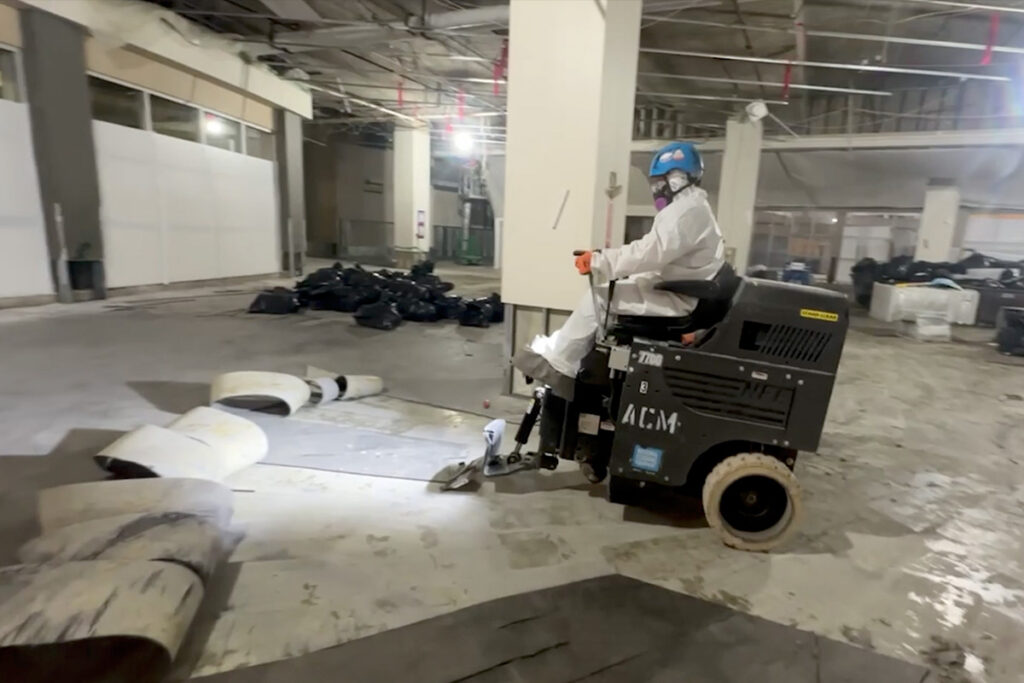
Once the necessary preparations, notifications, and approvals are complete, qualified abatement crews can begin removing the identified asbestos-containing materials.
The removal process varies depending on the material, its condition, accessibility, and the surrounding building environment. Removing asbestos-containing pipe insulation from a mechanical room, for example, may require different containment and work procedures than removing flooring materials across a large office space.
During abatement, contractors implement appropriate exposure controls and follow established procedures for collecting and managing contaminated materials.
How Commercial Asbestos Abatement Projects Differ in Scope
At the Rural King commercial renovation project in Cumberland, Maryland, ACM Services performed asbestos abatement and interior demolition across approximately 69,125 square feet of retail space. The project included removing 40,000 square feet of carpet, carpet glue, and asbestos-containing black mastic, along with 1,090 square feet of asbestos-containing built-up roofing and 10,000 square feet of ceramic floor tile and thinset. ACM used full containment and air monitoring procedures to manage hazardous materials during the renovation.
In contrast, ACM’s asbestos abatement project at The Ring Building in Washington, D.C. involved a substantially larger, multi-story commercial property. The project covered approximately 200,989 square feet across 12 commercial floors, a basement, and a penthouse. Crews removed 36,000 square feet of floor tile and mastic, 48,000 square feet of plaster, 2,500 linear feet of pipe insulation, and 3,000 square feet of ceramic tile grout.
These projects demonstrate how commercial asbestos abatement requirements change with the building’s layout, the materials involved, and the extent of the renovation. The Rural King project combined flooring and roofing material removal with interior demolition within a large retail space. Meanwhile, The Ring Building required asbestos removal across multiple floors and building systems, including extensive plaster removal and mechanical insulation abatement.
Although both projects involved asbestos-containing building materials, their different scopes required project-specific planning, containment, material handling, and coordination. Experienced abatement contractors evaluate these factors to develop removal procedures that address the property’s conditions while supporting the broader construction schedule.
Post-Abatement Inspection and Clearance
After removal, the affected area undergoes cleaning and inspection. Depending on the project and jurisdiction, an independent qualified professional may conduct a visual inspection, air sampling, or other required clearance procedures before the area is released for unrestricted access.
ACM Services recommends involving an independent third-party environmental consultant during this process. The consultant can review the completed abatement against the established scope of work and conduct the appropriate post-abatement verification procedures. This independent review helps provide property owners with documentation that the specified materials were addressed and applicable clearance criteria were met.
The project team should retain relevant documentation, including inspection findings, abatement records, waste disposal documentation, and applicable clearance results. These records can help property owners demonstrate compliance and provide valuable information for future renovations, maintenance, and property transactions.
How Does an Unexpected Asbestos Discovery Affect a Construction Schedule?
Discovering asbestos during an active renovation can affect several parts of a construction schedule. Work in the affected area may need to remain suspended while the contractor arranges inspections, receives laboratory results, develops an abatement plan, and satisfies applicable notification requirements.
The extent of the disruption depends on the type and quantity of asbestos-containing materials, their location, the regulatory requirements, and the availability of qualified abatement personnel. In some cases, the general contractor may be able to continue unrelated activities in other portions of the building while the affected area remains secured. This approach requires careful coordination to prevent cross-contamination and maintain appropriate separation between construction and abatement activities. Early communication between the property owner, general contractor, asbestos inspector, and abatement contractor can help identify scheduling conflicts and establish a practical sequence for completing the work.
When asbestos remediation and selective demolition are coordinated effectively, project teams may reduce unnecessary mobilizations and limit delays associated with transferring work between contractors. ACM’s turnkey environmental and demolition solutions are designed to streamline this coordination and support efficient project execution.
Can Commercial Renovations Continue While Asbestos Is Being Removed?
Some commercial projects can continue construction activities in unaffected portions of a building while asbestos abatement takes place elsewhere. Whether concurrent work is appropriate depends on the building layout, ventilation systems, occupancy, containment design, regulatory requirements, and the potential for workers or occupants to encounter asbestos fibers. For example, a contractor may be able to continue work on a separate floor while a properly isolated mechanical space undergoes abatement. However, shared air-handling systems, access routes, and adjacent construction activities can create complications that require additional controls.
ACM Services demonstrated this type of construction coordination during its Marriott Crystal City renovation project in Arlington, Virginia. The project involved asbestos abatement alongside selective interior and exterior demolition within an active hotel environment. ACM coordinated with other trades to complete the work while minimizing disruption to ongoing building operations.
Project managers should coordinate with qualified asbestos professionals before authorizing nearby work. Proper planning can help maintain safe working conditions while allowing unaffected project activities to progress.
How Can Property Owners Reduce the Risk of Unexpected Asbestos Discoveries?
The most effective way to reduce asbestos-related renovation delays is to evaluate potential hazards before construction begins. Property owners and general contractors should arrange appropriate pre-renovation asbestos inspections, review available building records, and communicate the proposed demolition scope to the inspector. Inspection planning should account for concealed materials that may become accessible during construction. In some cases, additional investigative openings or phased inspections may be necessary to evaluate building components before full-scale demolition begins.
Contractors should also establish clear procedures for reporting unidentified materials discovered during construction. Training workers to recognize potential asbestos-containing materials and communicate concerns promptly can reduce the likelihood of accidental disturbance.
These measures support more accurate project budgeting, safer work practices, and better coordination between environmental remediation and construction teams. Property owners preparing for major renovations can also review ACM Services’ completed environmental remediation and demolition projects to better understand the scope and complexity of asbestos removal in different commercial environments.
Professional Commercial Asbestos Abatement With ACM Services, Inc.
Unexpected asbestos discoveries require timely action, careful planning, and qualified remediation professionals. ACM Services, Inc. provides commercial environmental remediation services for general contractors, property owners, developers, and facility managers. Our teams coordinate hazardous material removal with broader construction and demolition activities, helping clients address environmental concerns while preparing their properties for the next phase of work. Whether your project involves an unexpected asbestos discovery, a planned building renovation, or a complete demolition, ACM Services can help evaluate the abatement scope and develop an appropriate removal strategy.
Planning a commercial renovation or dealing with suspected asbestos? Contact ACM Services, Inc. to discuss your project and learn more about our commercial asbestos abatement capabilities.